Perspective blogs
Perspectives on strategy work.
1.12.2025
“Municipal strategy – the guiding star of decision-making”

Piia Aitto-oja
Municipal councilor, member of the strategy work steering group
Let’s think about the time before navigators and maps apps. From my youth I remember that when setting off on a summer trip a paper map was spread on the car hood and, with the whole party, we studied which route to take to the next stop or destination.
And what about the time when there was not even a paper map or a compass? Back then living areas were of course very small, and when going further we took direction from the stars or the setting sun. The risk of getting lost and wandering off course was great.
We need maps and bearings in life for more than geographical navigation. One of the central guides of municipal decision-making, the municipal strategy, will be addressed in Janakkala at the December council.
We have an incredibly good and bold new strategy that does not talk about euros or about which service point will be preserved where. The strategy is like the sky, influencing all official preparatory work and guiding us decision-makers. A responsible decision-maker does not make decisions contrary to the strategy.
The municipal strategy is:
Guiding. The strategy must guide all municipal preparation and decision-making. If a resident asks for the reasons behind decisions, one answer should always be: “because this is how we have set it out in our strategy”.
Necessary. There is no point in creating a strategy just for the sake of it or to let it gather dust in a drawer. Drafting a strategy that is detached from reality or too abstract is a waste of resources.
Active. The strategy is a tool to be taken into immediate use, with its objectives visible throughout the council term.
Impactive. The role of the strategy is to be close to residents, municipal officials and decision-makers. Its effects must be visible and audible. The implementation of the strategy must be possible to assess with various indicators.
Broadening. At its best, a strategy opens our eyes and thinking to see the effects of decisions for the good of the whole municipality, not just to advance one’s own agenda or local interests. The strategy is the same for all residents; therefore, decisions made because of it must be as well.
May Janakkala’s new strategy shine like that seven-star constellation of hope in the northern sky. Even though it is quite dark in terms of the economy and world politics, even a small light shines brightly there, guiding the traveler in the right direction.
Joy, light and peace to your Christmas season!
27.11.2025
“Boldly Janakkala: now and in the 2040s”

Petri Hakamäki
Municipal councilor, member of the strategy work steering group
In general terms, the municipal strategy, vision and values form the foundation for all decision-making in the municipality. These guide the work of elected officials and municipal officials and ensure that decisions are made with long-term thinking and in the municipality’s overall interest. The task of the vision is to describe the desired future state: what kind of municipality we want to be in, for example, 10–15 years from now. Values, on the other hand, indicate the principles and ethical starting points by which the municipality operates.
When the municipal strategy is clear, decision-making becomes more consistent. It helps prioritize resources, steer the finances and select development projects that support the municipality’s long-term goals. With the strategy, vision and values we create a common direction that improves the transparency of decisions and increases residents’ trust in the municipality’s operations.
If the strategy is not followed or its implementation is not monitored during the council term, decision-making may become fragmented and decisions may start to be made to meet short-term needs. In such cases municipal resources can be spread inefficiently, goals may become contradictory and all possible development work loses coherence. The lack of monitoring also weakens transparency and residents’ trust, because strategic guidelines do not appear in practical decisions. Without systematic implementation a strategy easily remains just a paper in a drawer and cannot guide the building of the municipality’s future.
If the municipality’s operating environment changes significantly or the original goals no longer reflect the municipality’s real situation, updating the municipal strategy during the council term could be justified. An update could strengthen the strategy’s timeliness and ensure that decision-making remains appropriate also in changing conditions. On the other hand, changing too often would weaken the strategy’s long-term nature. Therefore updates should be based on a clear need and carried out only systematically.
In Janakkala the new council term 2025–2029 has begun by starting to update the municipal strategy. It is intended to be approved at the council meeting on 8 December. With the approval of the strategy we will actively start working in the manner required by the strategy and the first phase will be the implementation of the new strategy, vision and values in the municipality’s decision-making and in all other activities. The role of municipal officials, employees and all elected officials in all of this is significant, because each of us is the best marketing channel for our home municipality and place of residence.
I wish all current and new residents a bold and life-affirming journey toward an inclusive Janakkala in 2040. It is a privilege to be from Janakkala. Once you come to Janakkala, you will want to stay!
25.11.2025
“Choices for the benefit of Janakkala residents”
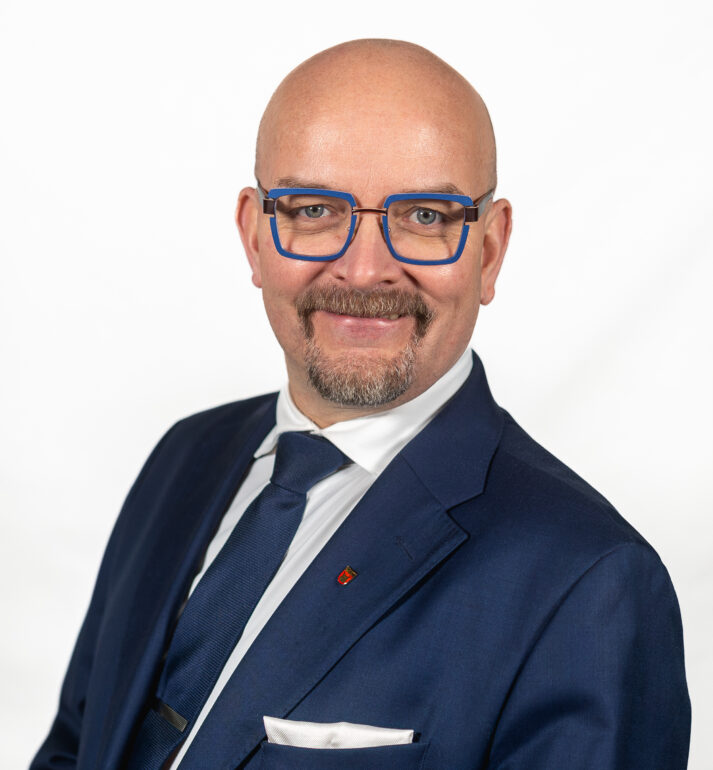
Marko Ahtiainen
Chair of the municipal council, member of the strategy work steering group
The municipal strategy is not just a document – it is a compass that guides official preparation, proposals for decisions and decision-making, showing which direction we want to go. The strategy’s most important task is to point the way toward a successful Janakkala for people, businesses and communities.
Janakkala’s success is built on the economic prosperity of people and households, wellbeing and opportunities. Every decision – whether related to education, the conditions for entrepreneurship or the development of services – affects how residents can live a safe and more prosperous life. The strategy should encourage solutions that create jobs, skills and growth.
Attractiveness arises from Janakkala being an appealing place to live, do business and visit. That means functional infrastructure, quality services and an environment where people enjoy living. The strategy guides us to invest wisely – not only to meet today’s needs, but also tomorrow’s opportunities. We should understand and reasonably acknowledge that the wealth of households and businesses strengthens the municipality’s possibilities and vice versa.
Courage is the heart of the strategy. All decisions are easy if the direction is common and the realities of the economy are understood with long-term benefit in mind. That may mean utilizing new technology, solutions that increase efficiency, giving up some services funded by public money or renewing services. The future is behind the door – we must dare to seize it. At the same time it is important to recognise that most everyday services for people are produced by the private sector, where the municipality’s role is to be a facilitator.
The municipal strategy of Janakkala can be an opportunity: will we make decisions that strengthen residents’ prosperity, wellbeing and build the success of our community? Together we can ensure that Janakkala is vibrant and attractive also for future generations. A vibrant and attractive municipality is a competitive everyday platform that nurtures the dreams of children and young people. For working-age people the municipality offers an environment that encourages taking risks where effort and work are rewarded. The strategy can point the way to a safe and active time after working life. Together we are stronger. Only prosperous households and businesses can create the municipality’s capacity and tax base with which we take care of those fellow human beings who cannot manage independently in daily life.
20.11.2025
“The power of community”

Merja Taponen
Municipal councilor, member of the strategy work steering group
In this uncertain world, security is rising to an immeasurable value. Community is security. The DNA of Janakkala’s village communities includes caring for neighbours. The activity of the village community after the explosive incident at the fireworks storage in Vähikkälä is a fine, recent example. The evacuation of residents in a crisis was handled by the village’s own forces. Municipal help was not needed, even though it would have been gladly received. When people care for matters and neighbours themselves and together, it also has a major economic significance. Not everything requires public funds.
We pay taxes on the same basis regardless of where in the municipality we live. However the availability of services funded from shared public funds varies greatly depending on where we live. Residents outside population centers do a lot themselves and on their own initiative—things that in population centers are done by the municipality. An example of this is building. In dispersed settlement areas wells and wastewater treatment are built and managed by residents themselves without public subsidies. Residents are also responsible for private road maintenance, to which at least a small municipal support is provided.
In practice the only municipal service provided outside population centers are the operating village schools. And they are indeed highly valued and important services when thinking of the future and attractiveness of the villages and the whole municipality. We offer a safe and nature-close environment for children to grow up in. Janakkala’s villages with their village schools must be seen as a great opportunity. It is our competitive advantage when families with children choose where to live.
Constant quarrelling about basic services, namely schools, does not promote the municipality’s development, but wastes unnecessary energy that should be directed to developing the municipality. When we learn to respect the needs and opinions of people living in different parts of the municipality, we can all be proud of our home municipality.
When considering a common municipal strategy, it is important to notice that conditions, starting points, hopes and needs are different in different parts of Janakkala. Equality must not mean making everyone the same.
Janakkala should be seen and felt as a community that values all residents, whether we live in villages or population centers. We are all Janakkala residents.
The strategy must be shared. Its aim should be well-being and satisfied residents. The Janakkala community has great positive strength if everyone is included in a spirit of appreciation and respect. We all need each other in order to succeed together.
18.9.2025
“A good municipal strategy genuinely guides operations”

Reijo Löytynoja
Chair of the municipal executive and the strategy work steering group
According to the Municipal Act, every municipality must have a municipal strategy in which the council decides on the long-term objectives for the municipality’s operations and finances. The strategy must guide the municipality’s activities and take into account key questions regarding the production and organization of services.
Municipal strategy – why is it needed?
In short, the strategy brings the ability to think long-term to decision-making. It also provides a backbone for municipal officials’ work to prepare matters in accordance with the strategy’s objectives. This work requires residents, decision-makers, municipal staff and municipal officials. So all of us!
So a strategy is needed!
A good strategy takes into account the municipality’s special features. Janakkala is the municipality of all of us. Our opportunities in the preparation of the strategy must be raised as spearheads. After all, we are a municipality whose geographical location enables an environment for entrepreneurship at the centre of good transport connections. A diverse supply of plots enables various safe and functional housing solutions as well as teleworking possibilities. New school centres respond to changing learning needs.
Our operating environment is a jungle of rapid changes. Although new challenges lie ahead, fortunately there are also opportunities. We need both strategic anticipation and financial preparedness for changes. A well-planned municipal strategy that takes into account all stakeholders and is based on our own strengths and opportunities provides a foundation for responding to future challenges. A good municipal strategy genuinely guides operations. A municipal strategy is therefore needed so that the municipality would develop systematically step by step, and wouldn’t residents then also be better off?
11.9.2025
“Janakkala needs a bold strategy that responds to new challenges”

Eerika Lampen
University intern
Strategy, strategy, what on earth is a strategy? A dry little document that no one understands? Or a magical key to vitality and happiness?
Maybe in reality neither. Working as a university trainee in Janakkala’s strategy working group has been an immensely interesting project where I have really been able to learn and do! I am originally from Janakkala and I completed my schooling in Tervakoski from daycare through the end of upper secondary school. At 19 I moved to Tampere to study administrative sciences and a work placement brought me back to Janakkala in May 2025. I could call myself taken away by the train and brought back.
The purpose of the internship was to collect information to support the strategy process, form future scenarios for the municipality of Janakkala and conduct a survey to clarify residents’ perspectives. I quickly began working on the strategy survey using the brand-new Maptionnaire software. Many ideas were tossed around for citizen participation in the strategy, but the tight schedule for drafting the strategy largely determined how the project proceeded. The residents’ strategy survey collected slowly but surely 1,910 responses. Respondents’ ability to bring up new ideas and describe problem areas in various ways, including through humour, has brought enthusiasm to the work. Thanks to every respondent for the honest, witty and inventive comments!
Janakkala is in many ways an average municipality and faces the typical challenges of an average municipality. From my perspective most residents enjoy a quiet and nature-close life, but the municipality’s challenges go deeper than everyday life. Population and birth rates have generally declined for almost 15 years, so we cannot too eagerly identify as a growth municipality. When studying population trends I was surprised at how early people move away from Janakkala. I recall 2010 when there were so many children in Janakkala that school buildings barely held them all. Those memories do not match the present. Of the children who then attended primary school in various buildings, only a fraction still live in Janakkala. Women of my age group now number 32 in the municipality, when at most there were over 100. The municipality faces challenges for which nobody seems to have a direct and easy solution.
Janakkala and the municipal sector have changed enormously, even if it does not look that way on the surface. The methods by which a municipality used to be led no longer suffice today. The strategy process has included reflection on increasing the municipality’s attractiveness and reversing migration flows. We do not live in past times; the municipality’s future requires re-trying and completely new perspectives. Janakkala profiles strongly as a municipality for families and logistics. These have taken us far, but they are no longer enough for the growth we dream of. There is greatness in reorienting and setting bold goals; that is the beauty of the strategy.
The author is a student of administrative sciences and was a university intern in Janakkala municipality.